Keratosis pilaris causes rough, raised bumps (or papules) on the skin’s surface. Excess keratin production is behind this common genetic disorder, which affects about 40% of adults and 50% to 80% of adolescents.1Thomas M, Khopkar US. Keratosis pilaris revisited: is it more than just a follicular keratosis? Int J Trichology. 2012;4(4):255-258. https://doi.org/10.4103/0974-7753.111215 The condition can affect the cheeks, arms, legs, buttocks, and various other parts of the body.
Conventional treatments for keratosis pilaris include over-the-counter and prescription lotions and creams containing salicylic acid, lactic acid, glycolic acid, alpha-hydroxy acids, or urea. Topical retinoids and other medicated creams are also used. However, keratosis pilaris can usually be managed without medication.
What causes keratosis pilaris?
Plugged hair follicles are the leading cause of keratosis pilaris, which may cause itching and moderate discomfort.1Thomas M, Khopkar US. Keratosis pilaris revisited: is it more than just a follicular keratosis? Int J Trichology. 2012;4(4):255-258. https://doi.org/10.4103/0974-7753.111215 The condition is benign and not contagious. But self-consciousness and emotional distress, especially with affected teenagers, can take their toll.
Keratin is a protein found in the skin’s outer layer that helps heal wounds and keep nails and hair healthy. But when the protein accumulates inside pores, it can block follicles, forming bumps that prevent hair from growing where it should.
Although there is no single cause of keratin buildup, genetic skin conditions, including atopic dermatitis, or a family history of keratosis pilaris, are often factors. People with eczema, dry skin, fair skin, ichthyosis, or hay fever may be more likely to develop keratosis pilaris. Obesity is another contributor.1Thomas M, Khopkar US. Keratosis pilaris revisited: is it more than just a follicular keratosis? Int J Trichology. 2012;4(4):255-258. https://doi.org/10.4103/0974-7753.111215
Keratosis pilaris is most common among children and adolescents and usually clears on its own by the mid–20s. Hormonal changes, including puberty, pregnancy, or menopause, can aggravate the condition.
Nutrient deficiencies (especially low levels of vitamin A, vitamin C, and essential fatty acids) may also be linked to flares.2Wong CY, Chu DH. Cutaneous signs of nutritional disorders. Int J Womens Dermatol. 2021;7(Part A):647-652. 2021;Sep 22. https://doi.org/10.1016/j.ijwd.2021.09.003
Signs and symptoms
Small, rough bumps that resemble “goose pimples” or “chicken skin” are the most noticeable symptom of keratosis pilaris. Bumps commonly appear on the upper arms and thighs and may vary in color depending on skin tone. Some are flesh-colored; others are white, pink, brown, red, or black. They don’t affect the palms of hands or soles of feet.
People with keratosis pilaris may also experience other symptoms:1Thomas M, Khopkar US. Keratosis pilaris revisited: is it more than just a follicular keratosis? Int J Trichology. 2012;4(4):255-258. https://doi.org/10.4103/0974-7753.111215
- Dry skin
- Itching and irritation
- Discoloration around bumps
Best natural treatments for keratosis pilaris
Adopting an anti-inflammatory diet

Dietary changes are one of the first steps in managing skin conditions like keratosis pilaris. Refined sugar, artificial ingredients, and overly processed foods all contribute to inflammation.2Wong CY, Chu DH. Cutaneous signs of nutritional disorders. Int J Womens Dermatol. 2021;7(Part A):647-652. 2021;Sep 22. https://doi.org/10.1016/j.ijwd.2021.09.003
An anti-inflammatory diet is rich in leafy greens, vegetables, fruits, nuts, seeds, and clean animal proteins. These skin-friendly staples help boost immunity and overall dermatological health:
- Omega–3s: Salmon and other wild-caught fatty fish3Thomsen BJ, Chow EY, Sapijaszko MJ. The potential uses of omega-3 fatty acids in dermatology: a review. J Cutan Med Surg. 2020;24(5):481-494. https://doi.org/10.1177/1203475420929925
- Vitamin A: Carrots, sweet potatoes, pumpkin4VanBuren CA, Everts HB. Vitamin A in skin and hair: an update. Nutrients. 2022;14(14):2952. 2022;Jul 19. https://doi.org/10.3390/nu14142952
- Zinc: Cashews and other nuts, chickpeas, lentils5Assaf S, Kelly O. Nutritional dermatology: optimizing dietary choices for skin health. Nutrients. 2024;17(1):60. 2024;Dec 27. https://doi.org/10.3390/nu17010060
Identifying sensitivities
According to Kelly Livingston, ND, founder of Roots Deep Medicine Clinic in Westport, Connecticut, food sensitivities are “common triggers for inflammation and (skin) barrier dysfunction.” Dr. Livingston notes dairy and gluten are among the most common sensitivities. Histamine intolerance, oxalate intolerance, and salicylate sensitivity may also result in skin-related problems.6Jochum C. Histamine intolerance: symptoms, diagnosis, and beyond. Nutrients. 2024;16(8):1219. 2024;Apr 19. https://doi.org/10.3390/nu16081219,7Blackmon JA, Jeffy BG, Malone JC, Knable AL Jr. Oxalosis involving the skin: case report and literature review. Arch Dermatol. 2011;147(11):1302-1305. https://doi.org/10.1001/archdermatol.2011.182,8Baenkler HW. Salicylate intolerance: pathophysiology, clinical spectrum, diagnosis and treatment. Dtsch Arztebl Int. 2008;105(8):137-142. https://doi.org/10.3238/arztebl.2008.0137
Although blood tests are available, an elimination diet is the most reliable way to identify food sensitivities or intolerance.
Addressing nutrient deficiencies
Dr. Livingston recommends functional lab testing, which “often reveals low omega–3s, low vitamin C, or low fat-soluble vitamins, such as A, D, E, and K.”2Wong CY, Chu DH. Cutaneous signs of nutritional disorders. Int J Womens Dermatol. 2021;7(Part A):647-652. 2021;Sep 22. https://doi.org/10.1016/j.ijwd.2021.09.003
Functional lab testing may also identify underlying causes of dietary deficiencies, including leaky gut syndrome and malabsorption.
Digestive support
An imbalanced microbiome or poor digestion that interferes with nutrient absorption, slows detoxification, and contributes to chronic inflammation can worsen keratosis pilaris symptoms. Fermented foods and probiotic supplements may help restore balance and improve absorption of key skin nutrients, like iron, zinc, and vitamin B12.9Gao T, Wang X, Li Y, Ren F. The role of probiotics in skin health and related gut-skin axis: a review. Nutrients. 2023;15(14):3123. 2023;Jul 13. https://doi.org/10.3390/nu15143123
“Bitters, bile flow aids, and castor oil packs support fat-soluble nutrient absorption,” says Dr. Livingston. Castor oil packs placed over the liver can “promote lymphatic flow, bile movement, and skin detoxification, which often improves keratosis pilaris.”
Gentle exfoliation
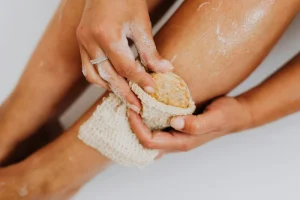
A consistent, gentle skincare routine helps reduce irritation and dryness.10Kaur K, Kaur A, Kalsi V, Kasav S. Keratosis pilaris unveiled: insights into its origin, management strategies and research frontiers. Indian J Dermatol. 2025;70(5):267-274. https://doi.org/10.4103/ijd.ijd_51_25 While hydrating affected skin with emollient moisturizers is essential, it’s just as important to remove dead skin cells. Proper exfoliation stimulates circulation and improves skin’s texture.
Homemade sea salt scrubs help clear dead skin cells, unclog follicles, and soothe irritation, without compromising moisture.11Hurisyahrani RN, Alamsjah MA, Pujiastuti DY. The effect of different salt concentration in physical nature preparation of face scrub gel Caulerpa racemosa. IOP Conf Ser Earth Environ Sci. 2024;1392(1):012024-012024. https://doi.org/10.1088/1755-1315/1392/1/012024
To make a scrub, mix two teaspoons of sea salt with four teaspoons of organic raw honey. Apply to skin for 15 minutes, then rinse with warm water.
Dr. Livingston recommends herbal body scrubs blended with oats, sea salt, or sugar and infused with calendula or chamomile oil. For additional anti-inflammatory and skin-protective benefits, extra-virgin coconut oil, jojoba oil, tea tree oil, or peppermint oil are good options.
She also encourages weekly baths with baking soda, magnesium flakes, or apple cider vinegar to soften rough skin and quell itching. Over time, these baths can contribute to smoother, healthier skin.
Daily moisturization

Hydration is essential for people with keratosis pilaris, especially after exfoliating or bathing. Apply a natural, preservative-free cream immediately after patting dry to help skin stay supple. “Moisture must be locked in immediately post-shower and supported from within,” says Dr. Livingston.
Whipped shea or mango butter mixed with jojoba or calendula oil can soften dry patches, particularly around affected areas. Oatmeal-, aloe-, and honey-based creams are soothing options for sensitive skin.12Carter DA, Blair SE, Cokcetin NN, et al. Therapeutic manuka honey: no longer so alternative. Front Microbiol. 2016 Apr 20;7:569. https://doi.org/10.3389/fmicb.2016.00569,13Shenefelt PD. Herbal treatment for dermatologic disorders. In: Benzie IFF, Wachtel-Galor S, eds. Herbal Medicine: Biomolecular and Clinical Aspects. 2nd ed. Boca Raton (FL): CRC Press/Taylor & Francis; 2011. https://ncbi.nlm.nih.gov/books/NBK92761
Vitamin A–rich oils (such as rosehip) may improve cell turnover and reduce keratosis pilaris symptoms. Avocado masks, also rich in vitamin A, can help reduce redness and irritation.14Oargă Porumb DP, Cornea-Cipcigan M, Cordea MI. Unveiling the mechanisms for the development of rosehip-based dermatological products: an updated review. Front Pharmacol. 2024 Apr 11;15:1390419. https://doi.org/10.3389/fphar.2024.1390419,15Lin TK, Zhong L, Santiago JL. Anti-inflammatory and skin barrier repair effects of topical application of some plant oils. Int J Mol Sci. 2017 Dec 27;19(1):70. https://doi.org/10.3390/ijms19010070
According to Dr. Livingston, skin prone to keratosis pilaris “often improves dramatically with internal oil and external balm. Omega–3 supplementation, hydration, and fiber can keep detox pathways open,” nourishing skin from within.
Loose, breathable clothing
Friction may aggravate keratosis pilaris, especially on the thighs or upper arms. Choose breathable, natural fabrics like cotton or bamboo, and wear loose-fitting clothing. Avoid synthetic blends and rough or itchy textures.
After exercise, shower or change into clean clothes as soon as possible. Use fragrance-free, natural detergents to minimize irritation.
Preventing flare-ups of keratosis pilaris
Sun protection
Sun damage can worsen keratosis pilaris and slow healing.10Kaur K, Kaur A, Kalsi V, Kasav S. Keratosis pilaris unveiled: insights into its origin, management strategies and research frontiers. Indian J Dermatol. 2025;70(5):267-274. https://doi.org/10.4103/ijd.ijd_51_25 Protect skin by avoiding peak UV hours, wearing protective clothing, and using a broad-spectrum SPF 30 or higher, even on cloudy days.
Stress management
“Skin is the body’s largest organ of communication,” Dr. Livingston notes. “Sometimes keratosis pilaris is less about keratin and more about how the body is whispering for support, clarity, or release.”
Mindfulness, meditation, breathwork, and gratitude practices can help reduce stress, which may also trigger flare-ups.16Guo F, Yu Q, Liu Z, et al. Evaluation of life quality, anxiety, and depression in patients with skin diseases. Medicine (Baltimore). 2020;99(44):e22983. https://doi.org/10.1097/MD.0000000000022983
Another way to keep stress in check is regular physical activity, such as yoga, walking, swimming, hiking, qi gong, or tai chi. Sleep is equally important. Seven to nine hours of high-quality rest each night is optimal for skin regeneration.
A whole person approach
A natural approach that supports the skin from the inside out works best for keratosis pilaris. Exfoliation, hydration, and gentle care help restore the skin’s texture, while nourishing foods, digestive wellness, and mindful movement strengthen immunity. These practices cultivate overall well-being, a foundation of healthy skin.
Footnotes
- 1Thomas M, Khopkar US. Keratosis pilaris revisited: is it more than just a follicular keratosis? Int J Trichology. 2012;4(4):255-258. https://doi.org/10.4103/0974-7753.111215
- 2Wong CY, Chu DH. Cutaneous signs of nutritional disorders. Int J Womens Dermatol. 2021;7(Part A):647-652. 2021;Sep 22. https://doi.org/10.1016/j.ijwd.2021.09.003
- 3Thomsen BJ, Chow EY, Sapijaszko MJ. The potential uses of omega-3 fatty acids in dermatology: a review. J Cutan Med Surg. 2020;24(5):481-494. https://doi.org/10.1177/1203475420929925
- 4VanBuren CA, Everts HB. Vitamin A in skin and hair: an update. Nutrients. 2022;14(14):2952. 2022;Jul 19. https://doi.org/10.3390/nu14142952
- 5Assaf S, Kelly O. Nutritional dermatology: optimizing dietary choices for skin health. Nutrients. 2024;17(1):60. 2024;Dec 27. https://doi.org/10.3390/nu17010060
- 6Jochum C. Histamine intolerance: symptoms, diagnosis, and beyond. Nutrients. 2024;16(8):1219. 2024;Apr 19. https://doi.org/10.3390/nu16081219
- 7Blackmon JA, Jeffy BG, Malone JC, Knable AL Jr. Oxalosis involving the skin: case report and literature review. Arch Dermatol. 2011;147(11):1302-1305. https://doi.org/10.1001/archdermatol.2011.182
- 8Baenkler HW. Salicylate intolerance: pathophysiology, clinical spectrum, diagnosis and treatment. Dtsch Arztebl Int. 2008;105(8):137-142. https://doi.org/10.3238/arztebl.2008.0137
- 9Gao T, Wang X, Li Y, Ren F. The role of probiotics in skin health and related gut-skin axis: a review. Nutrients. 2023;15(14):3123. 2023;Jul 13. https://doi.org/10.3390/nu15143123
- 10Kaur K, Kaur A, Kalsi V, Kasav S. Keratosis pilaris unveiled: insights into its origin, management strategies and research frontiers. Indian J Dermatol. 2025;70(5):267-274. https://doi.org/10.4103/ijd.ijd_51_25
- 11Hurisyahrani RN, Alamsjah MA, Pujiastuti DY. The effect of different salt concentration in physical nature preparation of face scrub gel Caulerpa racemosa. IOP Conf Ser Earth Environ Sci. 2024;1392(1):012024-012024. https://doi.org/10.1088/1755-1315/1392/1/012024
- 12Carter DA, Blair SE, Cokcetin NN, et al. Therapeutic manuka honey: no longer so alternative. Front Microbiol. 2016 Apr 20;7:569. https://doi.org/10.3389/fmicb.2016.00569
- 13Shenefelt PD. Herbal treatment for dermatologic disorders. In: Benzie IFF, Wachtel-Galor S, eds. Herbal Medicine: Biomolecular and Clinical Aspects. 2nd ed. Boca Raton (FL): CRC Press/Taylor & Francis; 2011. https://ncbi.nlm.nih.gov/books/NBK92761
- 14Oargă Porumb DP, Cornea-Cipcigan M, Cordea MI. Unveiling the mechanisms for the development of rosehip-based dermatological products: an updated review. Front Pharmacol. 2024 Apr 11;15:1390419. https://doi.org/10.3389/fphar.2024.1390419
- 15Lin TK, Zhong L, Santiago JL. Anti-inflammatory and skin barrier repair effects of topical application of some plant oils. Int J Mol Sci. 2017 Dec 27;19(1):70. https://doi.org/10.3390/ijms19010070
- 16Guo F, Yu Q, Liu Z, et al. Evaluation of life quality, anxiety, and depression in patients with skin diseases. Medicine (Baltimore). 2020;99(44):e22983. https://doi.org/10.1097/MD.0000000000022983