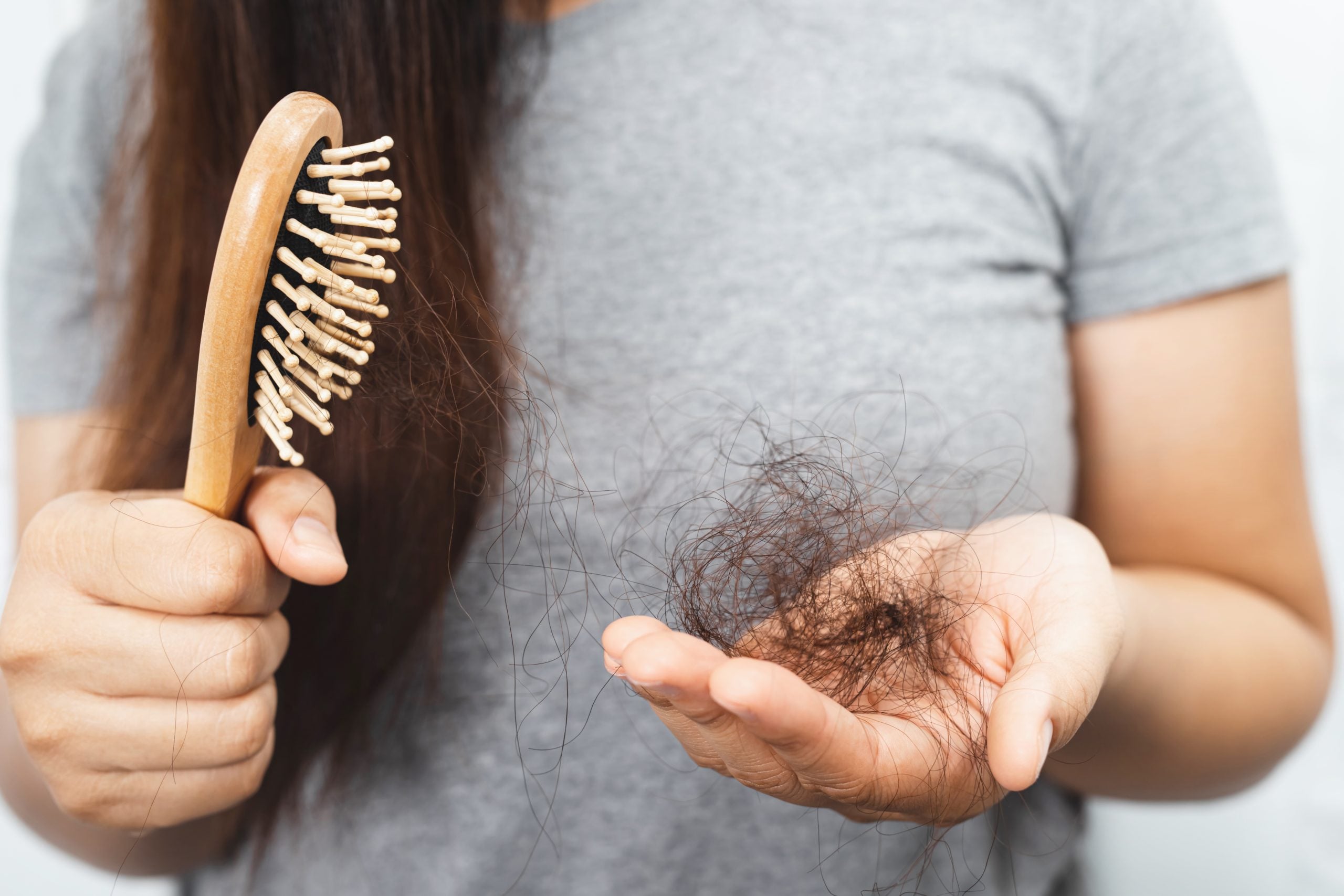
Any woman who has struggled with hair loss knows there’s nothing more disheartening than a pile of precious locks on the shower floor. Natural hair shedding happens on a cycle, but various factors can jolt the process out of whack. Sometimes, fallout is due to genetics, hormonal shifts, illness, or dietary deficiencies; other times, it’s inexplicable. While hair loss may be temporary, regrowth can take months or even years.1Natarelli N, Gahoonia N, Sivamani RK. Integrative and mechanistic approach to the hair growth cycle and hair loss. J Clin Med. 2023 Jan 23;12(3):893. https://doi.org/10.3390/jcm12030893
Natural treatments for hair loss have come a long way, focusing on the root cause of shedding and ensuring the body has what it needs to regenerate hair. Topical products, supplements, and low-level laser therapy can help improve scalp health and support the growth of stronger, thicker hair overall.
There are all kinds of hair loss
Some degree of hair loss (or shedding) is entirely normal. The average person has about 100,000 strands of hair. Losing 50 to 100 a day is typical and shouldn’t make a visible difference.
If fallout becomes more significant, especially over a short period, it may be due to external factors, life changes, hormonal fluctuations, or health complications. Various factors affect hair health. The following are just a few:
- Harsh chemical hair products, including sprays, gels, perms, dyes, bleach, and relaxers
- Tight ponytails, braids, and snug updos
- Nutrient deficiencies, particularly low levels of iron, folic acid, and vitamin D2Almohanna HM, Ahmed AA, Tsatalis JP, et al. The role of vitamins and minerals in hair loss: A review. Dermatol Ther (Heidelb). 2019;9(1):51-70. https://link.springer.com/article/10.1007/s13555-018-0278-6
- Pregnancy, childbirth, going off birth control, and menopause3Hirose A, Masakazu Terauchi, Tamami Odai, et al. Investigation of exacerbating factors for postpartum hair loss: a questionnaire-based cross-sectional study. Int J Womens Dermatol. 2023;9(2):e084-e084. https://doi.org/10.1097/jw9.0000000000000084,4Rinaldi F, Trink A, Giorgia Mondadori, et al. The menopausal transition: Is the hair follicle ‘going through menopause’? Biomedicines. 2023;11(11):3041-3041. https://doi.org/10.3390/biomedicines11113041
- Acute or chronic stress
- Significant rapid weight loss
- Treatment for autoimmune disorders, inflammatory conditions, cancer, or other health problems
- Eating disorders and malnutrition
Androgenetic alopecia is the most common cause of hair loss in women and men, affecting about half the population. With this condition, fallout occurs from excessive conversion of testosterone to dihydrotestosterone (DHT) or higher follicle sensitivity to DHT. It’s characterized by thinning hair and male or female pattern baldness. Although androgenetic alopecia commonly affects people in their 40s and 50s, it can start at any age.5Ho CH, Sood T, Zito PM. Androgenetic alopecia. In: StatPearls. StatPearls Publishing; 2025 Jan. https://www.ncbi.nlm.nih.gov/books/NBK430924
Numerous types of hair loss can cause moderate or significant shedding:
- Alopecia areata, an autoimmune disorder that causes hair loss, bald spots, and loss of eyebrows, eyelashes, and other hair on the body.6Darwin E, Hirt PA, Fertig R, et al. Alopecia areata: review of epidemiology, clinical features, pathogenesis, and new treatment options. Int J Trichology. 2018;10(2):51-60. https://doi.org/10.4103/ijt.ijt_99_17
- Anagen effluvium, often a (temporary) side effect of chemotherapy and radiation.7Saleh D, Nassereddin A, Cook C. Anagen effluvium. In: StatPearls. StatPearls Publishing; 2025. https://www.ncbi.nlm.nih.gov/books/NBK482293
- Telogen effluvium, triggered by a traumatic event, extreme stress, physical or emotional shock, illness, endocrine problems, menopause, pregnancy, childbirth, and certain medications.8Asghar F, Shamim N, Farooque U, et al. Telogen effluvium: a review of the literature. Cureus. 2020;12(5):e8320. https://doi.org/10.7759/cureus.8320
- Traction alopecia may develop from physical tension and pressure on the scalp (tight ponytails or braids).9Syed HA, Kaliyadan F. Traction alopecia. In: StatPearls. StatPearls Publishing; 2025. https://www.ncbi.nlm.nih.gov/books/NBK470434
- Tinea capitis results from a ringworm infection that produces itchy bald patches on the scalp.10Al Aboud AM, Crane JS. Tinea capitis. In: StatPearls. StatPearls Publishing; 2025 Jan. https://www.ncbi.nlm.nih.gov/books/NBK536909
Hair loss may also be associated with lupus, lichen planus (an inflammatory skin condition), and mast cell activation syndrome.11Concha JSS, Werth VP. Alopecias in lupus erythematosus. Lupus Sci Med. 2018 Oct 25;5(1):e000291. https://doi.org/10.1136/lupus-2018-000291,12Arnold DL, Krishnamurthy K. Lichen planus. In: StatPearls. StatPearls Publishing; 2025 Jan. https://www.ncbi.nlm.nih.gov/books/NBK526126,13Grace, S. A., Sutton, A. M., Abraham, et al Presence of mast cells and mast cell degranulation in scalp biopsies of telogen effluvium. Int J Trichology. 2017;9(1):25–29. https://doi.org/10.4103/ijt.ijt_43_16
Fallout is only one sign
There are obvious indicators of hair loss, like having to constantly pull out massive clumps from your favorite brush. But some symptoms are more subtle, developing over time:
- A receding or widening part or hairline
- Bald or partially bald patches
- Increased shedding while brushing or showering
- Loose hair that falls out easily, with or without brushing/combing
- Scalp itchiness, irritation, redness, or pain, not due to specific hair or skin conditions
Hair loss in men vs. women
Male pattern baldness is usually characterized by thinning hair at the crown and a receding hairline at the temples. Eventually, what appears to be a “horseshoe” pattern of hair may cover the sides and back of the head.
Female pattern baldness is characterized by thinning across the part and crown, while the hairline remains mostly intact. Instead of distinct bald spots, the hair’s density gradually decreases.
Among men, a significant predictor of hair loss is family history and the genetic sensitivity of follicles to DHT, which causes thinning. Female hair loss can also be attributed to androgens like DHT, but is more likely affected by hormonal shifts, such as menopause, pregnancy, changes postpartum, and polycystic ovary syndrome. Stress, thyroid issues, and iron deficiency can exacerbate these conditions.
Iron deficiency and hormone imbalance
“Hair loss is not an easy thing to address,” says Julie Lachman, ND, of Lachman & Associates in Bucks County, Pennsylvania. She recommends checking iron and ferritin levels as the first step. “With appropriate testing, you can uncover underlying problems, including low iron and hormonal issues.
If iron isn’t a problem, thyroid fluctuations may be contributing. Without enough of this central hormone, skin loses essential moisture. According to Dr. Lachman, hair along the outer eyebrows may thin, and even arm hair can shed. Hormonal changes and imbalances following pregnancy may also cause fallout.
Best natural remedies for hair loss
Green tea
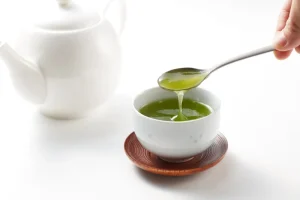
Antioxidant-rich green tea contains epigallocatechin gallate (EGCG). EGCG may protect against DHT–induced cell death, a common issue linked to hair thinning.14Shin S, Kim K, Lee MJ, et al. Epigallocatechin gallate-mediated alteration of the microRNA expression profile in 5α-dihydrotestosterone-treated human dermal papilla cells. Ann Dermatol. 2016;28(3):327. https://doi.org/10.5021/ad.2016.28.3.327
Green tea also helps promote microbial balance and healthy inflammatory responses, which may help support a stronger scalp.15Liao R, Parker T, Bellerose K, et al. A green tea containing skincare system improves skin health and beauty in adults: An exploratory controlled clinical Study. Cosmetics. 2022;9(5):96. https://doi.org/10.3390/cosmetics9050096 Drinking one to two cups daily or rinsing hair with cool green tea after shampooing could help promote growth. Some natural shampoos targeting hair loss contain green tea.
Essential oils
Rosemary, geranium, lavender, peppermint, and tea tree oil are some of the most popular essential oils for supporting the hair growth cycle, improving circulation, stimulating hair follicles, increasing hair thickness, and decreasing breakage.16Bin Rubaian N, Alzamami H, Amir B. An overview of commonly used natural alternatives for the treatment of androgenetic alopecia, with special emphasis on rosemary oil. Clin Cosmet Investig Dermatol. 2024;Volume 17:2495-2503. https://doi.org/10.2147/ccid.s470989,17Boisvert WA, Yu M, Choi Y, et al. Hair growth-promoting effect of Geranium sibiricum extract in human dermal papilla cells and C57BL/6 mice. BMC Complement Altern Med. 2017;17(1). https://doi.org/10.1186/s12906-017-1624-4,18Lee BH, Lee JS, Kim YC. Hair growth-promoting effects of lavender oil in c57bl/6 mice. Toxicol Res. 2016;32(2):103-108. https://doi.org/10.5487/tr.2016.32.2.103,19Patel MN, Tuli N, Patel N, et al. Rosmagain as a natural therapeutic for hair regrowth and scalp health: A double-blind, randomized, three-armed, placebo-controlled clinical trial. Cureus. 2025. https://doi.org/10.7759/cureus.85906,20Oh JY, Park MA, Kim YC. Peppermint oil promotes hair growth without toxic signs. Toxicol Res. 2014;30(4):297-304. https://doi.org/10.5487/tr.2014.30.4.297,21Ezekwe N, King M, Hollinger JC. The use of natural ingredients in the treatment of alopecias with an emphasis on central centrifugal cicatricial alopecia: A systematic review. J Clin Aesthet Dermatol. 2020;13(8):23-27. https://pmc.ncbi.nlm.nih.gov/articles/PMC7595365
Apply a few drops of high-quality, food-grade essential oil diluted with coconut oil, jojoba oil, or another carrier directly to the scalp. To avoid potential itching or irritation, test a small area of skin first.
Vitamin E
Vitamin E is a powerful antioxidant that may protect cells from oxidative stress, a potential factor in hair follicle damage and thinning.22Du F, Li J, Zhang S, Zeng X, et al. Oxidative stress in hair follicle development and hair growth: Signalling pathways, intervening mechanisms and potential of natural antioxidants. J Cell Mol Med. 2024;28(12). https://doi.org/10.1111/jcmm.18486 It can support a healthy scalp environment and promote circulation, ensuring hair follicles receive sufficient oxygen and nutrients for optimal growth. Vitamin E can be applied topically to the scalp, taken as a supplement, or obtained through foods like sunflower seeds, almonds, and spinach.
Coconut oil
Coconut oil can help support healthy hair by moisturizing and strengthening strands. Rich in natural fatty acids (particularly lauric acid, which may minimize breakage and improve elasticity), it also promotes a balanced scalp environment that could encourage growth.23Saxena R, Mittal P, Clavaud C, et al. Longitudinal study of the scalp microbiome suggests coconut oil to enrich healthy scalp commensals. Sci Rep. 2021;11(1):7220. https://doi.org/10.1038/s41598-021-86454-1 Coconut oil can be massaged into the hair and scalp for 30 minutes or left overnight before washing, or incorporated into natural hair products.
Pumpkin seed oil
Pumpkin seed oil contains essential fatty acids, vitamin E, and zinc, all of which can help maintain healthy hair. Also high in phytosterols, research suggests pumpkin seed oil inhibits the enzyme 5–alpha reductase, lowering levels of DHT. Some studies suggest the oil may be effective both orally and topically for androgenetic alopecia in men. More research is needed on female hair loss.24Cho YH, Lee SY, Jeong DW, et al. Effect of pumpkin seed oil on hair growth in men with androgenetic alopecia: a randomized, double-blind, placebo-controlled trial. Evid Based Complement Alternat Med. 2014;2014:549721. https://doi.org/10.1155/2014/549721,25Hajhashemi V, Rajabi P, Mardani M. Beneficial effects of pumpkin seed oil as a topical hair growth promoting agent in a mice model. Avicenna J Phytomed. 2019;9(6):499-504. https://doi.org/10.22038/AJP.2019.13463
Oleic acid
Oleic acid is a monounsaturated omega–9 fatty acid found in olive, avocado, and argan oils. It provides deep moisturizing and anti-inflammatory effects, which could help reduce dry scalp, clogged follicles, and flakiness.26Seo J, Matsumoto K, Nanmo A, et al. The role of lipids in promoting hair growth through HIF-1 signaling pathway. Sci Rep. 2025 Feb 7;15(1):4621. https://doi.org/10.1038/s41598-025-88697-8 Oils rich in oleic acid may also enhance the penetration of other hair growth–promoting nutrients.27Mysore V, Arghya A. Hair oils: Indigenous knowledge revisited. Int J Trichology. 2022;14(3):84-90. https://pubmed.ncbi.nlm.nih.gov/35755964
Vitamins and minerals
Nutrient deficiencies can contribute to hair thinning and loss. Key nutrients include iron, zinc, selenium, vitamin A, B vitamins, vitamin C, vitamin D, and vitamin E.28Almohanna HM, Ahmed AA, Tsatalis JP, Tosti A. The role of vitamins and minerals in hair loss: A review. Dermatol Ther (Heidelb). 2019;9(1):51-70. https://doi.org/10.1007/s13555-018-0278-6 A healthcare provider can test nutrient levels and determine appropriate supplementation to help reduce hair loss.
Scalp massage
Scalp massage improves circulation and blood flow to hair follicles, supporting nutrient delivery and promoting growth. Regular massage may enhance follicle activity and complement other treatments.29English RS, Barazesh JM. Self-assessments of standardized scalp massages for androgenic alopecia: Survey results. Dermatol Ther (Heidelb). 2019;9(1):167-178. https://doi.org/10.1007/s13555-019-0281-6,30GhavamiH, Arjomand L, Radfar M, Khalkali HR. Effects of reflexology massage on hair regrowth after chemotherapy-induced alopecia among women with cancer: A randomised clinical trial. Bezmialem Science. 2020;8(3):215-221. https://doi.org/10.14235/bas.galenos.2019.3473
Low-level laser therapy
Low-level laser therapy (LLLT) is a rapidly growing noninvasive technology that uses red or near-infrared light to treat hair loss. LLLT may enhance blood flow, increase cellular activity, stimulate hair follicles, and support the growth phase of the hair cycle, leading to significant regrowth for both men and women.31Pillai J, Mysore V. Role of low-level light therapy (LLLT) in androgenetic alopecia. J Cutan Aesthet Surg. 2021;14(4):385. https://doi.org/10.4103/jcas.jcas_218_20
According to Julie Greenberg, ND, founder of Root Cause Dermatology in Lake Oswego, Oregon, LLLT should be combined with nutritional and lifestyle strategies. “It works best as part of a comprehensive plan rather than as a standalone treatment,” Dr. Greenberg notes. “The downside is that it can be expensive and often takes four to six months before [there is] a noticeable change. People with photosensitive conditions or [those] who are taking photosensitizing medications should check with their healthcare provider before starting.”
Choose a nutrient-dense diet

Nutrient deficiencies are a common contributor to hair loss, making a well-balanced diet essential for healthy growth. Whole foods that provide both macro- and micronutrients include leafy greens, vegetables, sprouts, fermented foods, fruits, nuts, seeds, grass-fed meats, pasture-raised poultry and eggs, wild-caught fish and seafood, and wild game. At the same time, limit low-nutrient, processed foods to support stronger, healthier hair from the inside out.
“Dark leafy greens for iron and folate, brightly colored fruits and vegetables for antioxidants, and omega–3–rich foods like salmon, sardines, and flaxseed all help protect and nourish follicles,” says Dr. Greenberg.
Lifestyle tips to support hair health
Proper hair care can support growth while reducing thinning, shedding, and breakage. Opt for gentle, natural, and organic products that nourish hair without harsh ingredients. Minimize excessive heat styling and chemical treatments, and avoid tight hairstyles that put stress on the scalp. Use a wide-tooth comb made from natural materials, such as bamboo.
Avoid smoking
Smoking and secondhand smoke affect the follicular growth cycle and hair pigmentation, with nicotine accumulating in the hair shaft and follicles. Alopecia and premature hair graying are notably higher in smokers.32Babadjouni A, Pouldar Foulad D, Hedayati B, et al. The effects of smoking on hair health: A systematic review. Skin Appendage Disord. 2021;7(4):251-264. https://pubmed.ncbi.nlm.nih.gov/34307472
Lower your stress levels
During stress, the body releases a hormone called cortisol, which may disrupt the hair growth cycle.33Thom E. Stress and the hair growth cycle: Cortisol-induced hair growth disruption. J Drugs Dermatol. 2016;8(15). https://jddonline.com/articles/stress-and-the-hair-growth-cycle-cortisol-induced-hair-growth-disruption-S1545961616P1001X According to Xamantha Curameng, ND, of Meridian Medicine in Seattle, Washington, “Stress also promotes systemic inflammation, which can damage hair follicles, reduce blood flow to the scalp, and impair nutrient delivery, ultimately leading to hair loss.”
“Effective stress management strategies differ for everyone,” notes Dr. Curameng. “What works for one person may not work for another, so I would say do whatever makes you feel good. Find ways to incorporate (or reincorporate) joy in your life. Journaling, breathwork, and other mindfulness-based strategies may prove helpful.”
Footnotes
- 1Natarelli N, Gahoonia N, Sivamani RK. Integrative and mechanistic approach to the hair growth cycle and hair loss. J Clin Med. 2023 Jan 23;12(3):893. https://doi.org/10.3390/jcm12030893
- 2Almohanna HM, Ahmed AA, Tsatalis JP, et al. The role of vitamins and minerals in hair loss: A review. Dermatol Ther (Heidelb). 2019;9(1):51-70. https://link.springer.com/article/10.1007/s13555-018-0278-6
- 3Hirose A, Masakazu Terauchi, Tamami Odai, et al. Investigation of exacerbating factors for postpartum hair loss: a questionnaire-based cross-sectional study. Int J Womens Dermatol. 2023;9(2):e084-e084. https://doi.org/10.1097/jw9.0000000000000084
- 4Rinaldi F, Trink A, Giorgia Mondadori, et al. The menopausal transition: Is the hair follicle ‘going through menopause’? Biomedicines. 2023;11(11):3041-3041. https://doi.org/10.3390/biomedicines11113041
- 5Ho CH, Sood T, Zito PM. Androgenetic alopecia. In: StatPearls. StatPearls Publishing; 2025 Jan. https://www.ncbi.nlm.nih.gov/books/NBK430924
- 6Darwin E, Hirt PA, Fertig R, et al. Alopecia areata: review of epidemiology, clinical features, pathogenesis, and new treatment options. Int J Trichology. 2018;10(2):51-60. https://doi.org/10.4103/ijt.ijt_99_17
- 7Saleh D, Nassereddin A, Cook C. Anagen effluvium. In: StatPearls. StatPearls Publishing; 2025. https://www.ncbi.nlm.nih.gov/books/NBK482293
- 8Asghar F, Shamim N, Farooque U, et al. Telogen effluvium: a review of the literature. Cureus. 2020;12(5):e8320. https://doi.org/10.7759/cureus.8320
- 9Syed HA, Kaliyadan F. Traction alopecia. In: StatPearls. StatPearls Publishing; 2025. https://www.ncbi.nlm.nih.gov/books/NBK470434
- 10Al Aboud AM, Crane JS. Tinea capitis. In: StatPearls. StatPearls Publishing; 2025 Jan. https://www.ncbi.nlm.nih.gov/books/NBK536909
- 11Concha JSS, Werth VP. Alopecias in lupus erythematosus. Lupus Sci Med. 2018 Oct 25;5(1):e000291. https://doi.org/10.1136/lupus-2018-000291
- 12Arnold DL, Krishnamurthy K. Lichen planus. In: StatPearls. StatPearls Publishing; 2025 Jan. https://www.ncbi.nlm.nih.gov/books/NBK526126
- 13Grace, S. A., Sutton, A. M., Abraham, et al Presence of mast cells and mast cell degranulation in scalp biopsies of telogen effluvium. Int J Trichology. 2017;9(1):25–29. https://doi.org/10.4103/ijt.ijt_43_16
- 14Shin S, Kim K, Lee MJ, et al. Epigallocatechin gallate-mediated alteration of the microRNA expression profile in 5α-dihydrotestosterone-treated human dermal papilla cells. Ann Dermatol. 2016;28(3):327. https://doi.org/10.5021/ad.2016.28.3.327
- 15Liao R, Parker T, Bellerose K, et al. A green tea containing skincare system improves skin health and beauty in adults: An exploratory controlled clinical Study. Cosmetics. 2022;9(5):96. https://doi.org/10.3390/cosmetics9050096
- 16Bin Rubaian N, Alzamami H, Amir B. An overview of commonly used natural alternatives for the treatment of androgenetic alopecia, with special emphasis on rosemary oil. Clin Cosmet Investig Dermatol. 2024;Volume 17:2495-2503. https://doi.org/10.2147/ccid.s470989
- 17Boisvert WA, Yu M, Choi Y, et al. Hair growth-promoting effect of Geranium sibiricum extract in human dermal papilla cells and C57BL/6 mice. BMC Complement Altern Med. 2017;17(1). https://doi.org/10.1186/s12906-017-1624-4
- 18Lee BH, Lee JS, Kim YC. Hair growth-promoting effects of lavender oil in c57bl/6 mice. Toxicol Res. 2016;32(2):103-108. https://doi.org/10.5487/tr.2016.32.2.103
- 19Patel MN, Tuli N, Patel N, et al. Rosmagain as a natural therapeutic for hair regrowth and scalp health: A double-blind, randomized, three-armed, placebo-controlled clinical trial. Cureus. 2025. https://doi.org/10.7759/cureus.85906
- 20Oh JY, Park MA, Kim YC. Peppermint oil promotes hair growth without toxic signs. Toxicol Res. 2014;30(4):297-304. https://doi.org/10.5487/tr.2014.30.4.297
- 21Ezekwe N, King M, Hollinger JC. The use of natural ingredients in the treatment of alopecias with an emphasis on central centrifugal cicatricial alopecia: A systematic review. J Clin Aesthet Dermatol. 2020;13(8):23-27. https://pmc.ncbi.nlm.nih.gov/articles/PMC7595365
- 22Du F, Li J, Zhang S, Zeng X, et al. Oxidative stress in hair follicle development and hair growth: Signalling pathways, intervening mechanisms and potential of natural antioxidants. J Cell Mol Med. 2024;28(12). https://doi.org/10.1111/jcmm.18486
- 23Saxena R, Mittal P, Clavaud C, et al. Longitudinal study of the scalp microbiome suggests coconut oil to enrich healthy scalp commensals. Sci Rep. 2021;11(1):7220. https://doi.org/10.1038/s41598-021-86454-1
- 24Cho YH, Lee SY, Jeong DW, et al. Effect of pumpkin seed oil on hair growth in men with androgenetic alopecia: a randomized, double-blind, placebo-controlled trial. Evid Based Complement Alternat Med. 2014;2014:549721. https://doi.org/10.1155/2014/549721
- 25Hajhashemi V, Rajabi P, Mardani M. Beneficial effects of pumpkin seed oil as a topical hair growth promoting agent in a mice model. Avicenna J Phytomed. 2019;9(6):499-504. https://doi.org/10.22038/AJP.2019.13463
- 26Seo J, Matsumoto K, Nanmo A, et al. The role of lipids in promoting hair growth through HIF-1 signaling pathway. Sci Rep. 2025 Feb 7;15(1):4621. https://doi.org/10.1038/s41598-025-88697-8
- 27Mysore V, Arghya A. Hair oils: Indigenous knowledge revisited. Int J Trichology. 2022;14(3):84-90. https://pubmed.ncbi.nlm.nih.gov/35755964
- 28Almohanna HM, Ahmed AA, Tsatalis JP, Tosti A. The role of vitamins and minerals in hair loss: A review. Dermatol Ther (Heidelb). 2019;9(1):51-70. https://doi.org/10.1007/s13555-018-0278-6
- 29English RS, Barazesh JM. Self-assessments of standardized scalp massages for androgenic alopecia: Survey results. Dermatol Ther (Heidelb). 2019;9(1):167-178. https://doi.org/10.1007/s13555-019-0281-6
- 30GhavamiH, Arjomand L, Radfar M, Khalkali HR. Effects of reflexology massage on hair regrowth after chemotherapy-induced alopecia among women with cancer: A randomised clinical trial. Bezmialem Science. 2020;8(3):215-221. https://doi.org/10.14235/bas.galenos.2019.3473
- 31Pillai J, Mysore V. Role of low-level light therapy (LLLT) in androgenetic alopecia. J Cutan Aesthet Surg. 2021;14(4):385. https://doi.org/10.4103/jcas.jcas_218_20
- 32Babadjouni A, Pouldar Foulad D, Hedayati B, et al. The effects of smoking on hair health: A systematic review. Skin Appendage Disord. 2021;7(4):251-264. https://pubmed.ncbi.nlm.nih.gov/34307472
- 33Thom E. Stress and the hair growth cycle: Cortisol-induced hair growth disruption. J Drugs Dermatol. 2016;8(15). https://jddonline.com/articles/stress-and-the-hair-growth-cycle-cortisol-induced-hair-growth-disruption-S1545961616P1001X