
Overview
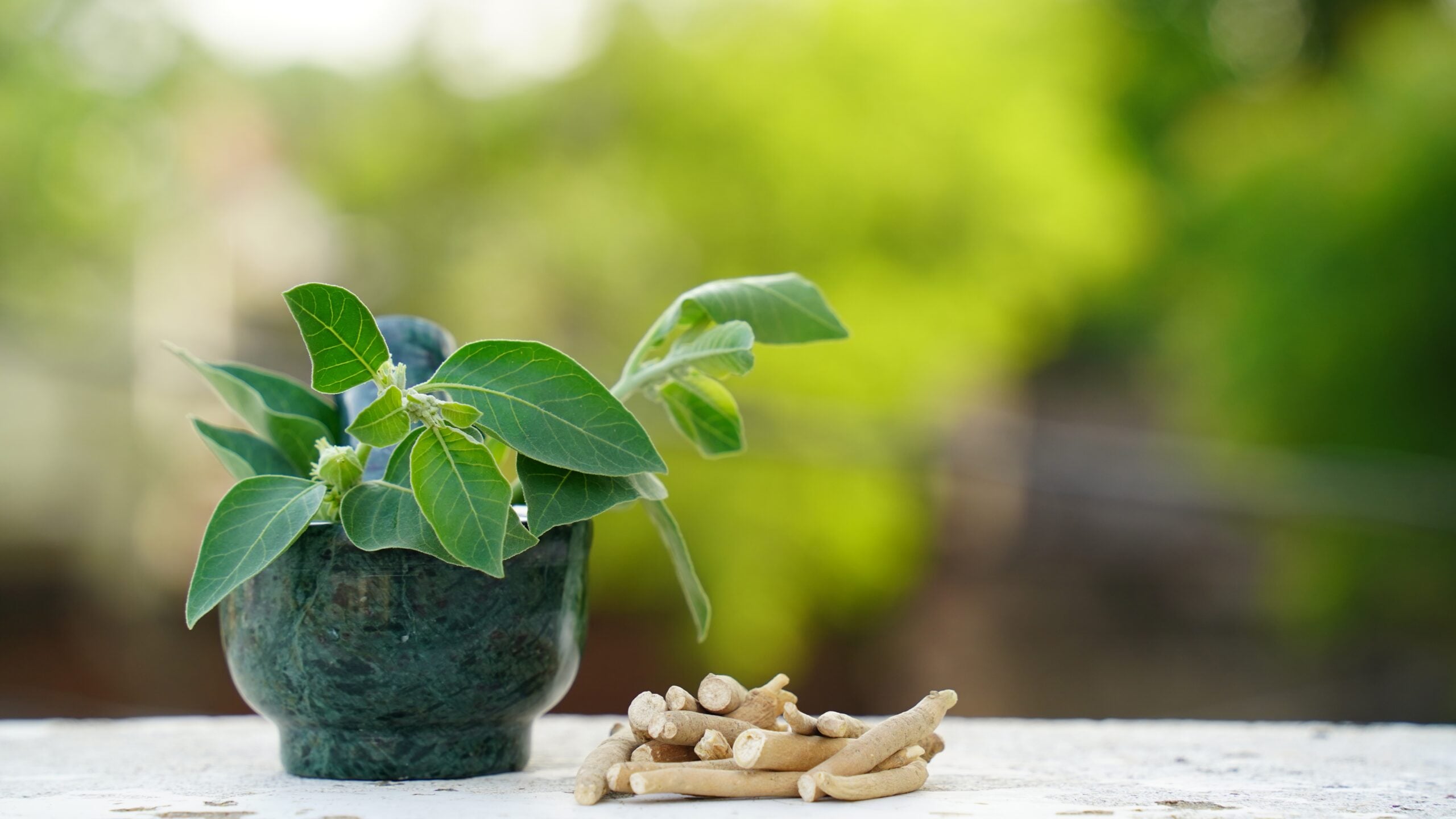
Ashwagandha (Withania somnifera) is an adaptogenic herb prominent in Ayurvedic medicine for thousands of years. Adaptogens help the body adapt and maintain balance during periods of physical or mental stress. Ashwagandha’s root is the most commonly used part of the plant and is believed to support energy, healthy aging, and overall wellness.
Benefits
Ashwagandha has known calming effects and works on multiple body functions simultaneously to regulate dysfunction and metabolic processes. In particular, the adaptogen may lessen the severity of depression1Majeed M, Nagabhushanam K, Murali A, Vishwanathan DT, Mamidala RV, Mundkur L. A standardized Withania somnifera (Linn.) root extract with piperine alleviates the symptoms of anxiety and depression by increasing serotonin levels: a double-blind, randomized, placebo-controlled study. J Integr Complement Med. 2024 May;30(5):459-468. https://doi.org/10.1089/jicm.2023.0279 and anxiety2Majeed M, Nagabhushanam K, Mundkur L. A standardized ashwagandha root extract alleviates stress, anxiety, and improves quality of life in healthy adults by modulating stress hormones: results from a randomized, double-blind, placebo-controlled study. Medicine (Baltimore). 2023 Oct 13;102(41):e35521. https://doi.org/10.1097/MD.0000000000035521 while promoting more consistent and higher-quality sleep.3Gopukumar K, Thanawala S, Somepalli V, Rao TSS, Thamatam VB, Chauhan S. Efficacy and safety of ashwagandha root extract on cognitive functions in healthy, stressed adults: a randomized, double-blind, placebo-controlled study. Evid Based Complement Alternat Med. 2021;2021:8254344. https://doi.org/10.1155/2021/8254344 It has also been shown to improve thyroid function for subclinical hypothyroidism patients4Sharma AK, Basu I, Singh S. Efficacy and safety of ashwagandha root extract in subclinical hypothyroid patients: a double-blind, randomized placebo-controlled trial. J Altern Complement Med. 2018;24(3):243-248. https://doi.org/10.1089/acm.2017.0183 and stimulate the immune response.5Tharakan A, Shukla H, Benny IR, Tharakan M, George L, Koshy S. Immunomodulatory effect of withania somnifera (ashwagandha) extract—a randomized, double-blind, placebo controlled trial with an open label extension on healthy participants. J Clin Med. 2021 Aug 18;10(16):3644. https://doi.org/10.3390/jcm10163644,6Alanazi HH, Elfaki E. The immunomodulatory role of Withania somnifera (L.) Dunal in inflammatory diseases. Front Pharmacol. 2023 Feb 22;14:1084757. https://doi.org/10.3389/fphar.2023.1084757
Among botanicals, ashwagandha is distinguished by the breadth and depth of evidence supporting its benefits. Preclinical studies demonstrate its ability to regulate mitochondrial function and apoptosis and reduce inflammation by inhibiting cytokines (e.g., IL–6 and TNF–α), nitric oxide, and reactive oxygen species.7Mikulska P, Malinowska M, Ignacyk M, et al. Ashwagandha (Withania somnifera)—current research on the health-promoting activities: a narrative review. Pharmaceutics. 2023 Mar 24;15(4):1057. https://doi.org/10.3390/pharmaceutics15041057
Potential uses
Although more studies are needed, ashwagandha may support healthy testosterone levels and fertility in men.8Sengupta P, Agarwal A, Pogrebetskaya M, Roychoudhury S, Durairajanayagam D, Henkel R. Role of Withania somnifera (ashwagandha) in the management of male infertility. Reprod Biomed Online. 2017;36:311–26. https://doi.org/10.1016/j.rbmo.2017.11.007 It could be helpful for endocrine conditions like adrenal fatigue and Cushing’s disease by lowering cortisol.9Toth-Meszaros A, Garmaa G, Hegyi P, et al. The effect of adaptogenic plants on stress: a systematic review and meta-analysis. J Funct Foods. 2023;108. https://www.sciencedirect.com/science/article/pii/S1756464623002955
Evidence
Seventy participants in a randomized controlled trial who took 500 mg ashwagandha root extract (ARE) (standardized for 2.5% withanolides) with 5 mg piperine for 90 days noted significant improvements in depression, anxiety, and sleep quality. Improvements among the ARE group were 52.1% for anxiety and 52.9% for depression, compared with 13.6% and 11.6% for placebo. Serum serotonin levels increased with ARE, whereas the placebo group showed a decrease. The difference was statistically significant (p < 0.001). ARE improved sleep and quality of life in 100% and 97% of participants, respectively; 83.3% and 55.5% of the placebo group reported positive changes.1Majeed M, Nagabhushanam K, Murali A, Vishwanathan DT, Mamidala RV, Mundkur L. A standardized Withania somnifera (Linn.) root extract with piperine alleviates the symptoms of anxiety and depression by increasing serotonin levels: a double-blind, randomized, placebo-controlled study. J Integr Complement Med. 2024 May;30(5):459-468. https://doi.org/10.1089/jicm.2023.0279
In a randomized double-blind, placebo-controlled study, 50 healthy people with mild to moderate stress and anxiety who took 500 mg ARE (Shagandha) with 5 mg piperine for 60 days had significantly improved symptoms compared with placebo. ARE with 2.5% withanolides was shown to reduce cortisol, increase serotonin, and improve cognitive performance in tasks such as multitasking, focusing, and decision-making.2Majeed M, Nagabhushanam K, Mundkur L. A standardized ashwagandha root extract alleviates stress, anxiety, and improves quality of life in healthy adults by modulating stress hormones: results from a randomized, double-blind, placebo-controlled study. Medicine (Baltimore). 2023 Oct 13;102(41):e35521. https://doi.org/10.1097/MD.0000000000035521 Research suggests ashwagandha considerably decreases cortisol levels in mentally stressed (but healthy) adults.9Toth-Meszaros A, Garmaa G, Hegyi P, et al. The effect of adaptogenic plants on stress: a systematic review and meta-analysis. J Funct Foods. 2023;108. https://www.sciencedirect.com/science/article/pii/S1756464623002955
In a double-blind clinical trial, three months of ashwagandha supplementation markedly improved psychological well-being and sleep quality.3Gopukumar K, Thanawala S, Somepalli V, Rao TSS, Thamatam VB, Chauhan S. Efficacy and safety of ashwagandha root extract on cognitive functions in healthy, stressed adults: a randomized, double-blind, placebo-controlled study. Evid Based Complement Alternat Med. 2021;2021:8254344. https://doi.org/10.1155/2021/8254344
Ashwagandha-derived withanolides, particularly withaferin A, have been reported to modulate protein kinase–mediated signaling pathways, including IKK/NF–κB, JAK/STAT, and MAPK pathways, which play important roles in inflammatory and autoimmune responses. These findings suggest potential immunomodulatory effects, although clinical evidence on autoimmune diseases remains limited.10Kaileh M, Vanden Berghe W, Heyerick A, et al. Withaferin A strongly elicits IkappaB kinase beta hyperphosphorylation concomitant with potent inhibition of its kinase activity. J Biol Chem. 2007 Feb 16;282(7):4253-4264. https://doi.org/10.1074/jbc.M606728200,11Logie E, Vanden Berghe W. Tackling chronic inflammation with withanolide phytochemicals—a withaferin perspective. Antioxidants (Basel). 2020 Nov 10;9(11):1107. https://doi.org/10.3390/antiox9111107,12Sultana T, Okla MK, Ahmed M, et al. Withaferin A: from ancient remedy to potential drug candidate. Molecules. 2021 Dec 20;26(24):7696. https://doi.org/10.3390/molecules26247696
Protein kinase inhibitors are known for their potent applications in autoimmune disorders.11Logie E, Vanden Berghe W. Tackling chronic inflammation with withanolide phytochemicals—a withaferin perspective. Antioxidants (Basel). 2020 Nov 10;9(11):1107. https://doi.org/10.3390/antiox9111107,13Patterson H, Nibbs R, McInnes I, Siebert S. Protein kinase inhibitors in the treatment of inflammatory and autoimmune diseases. Clin Exp Immunol. 2014 Apr;176(1):1-10. https://doi.org/10.1111/cei.12248 Most ashwagandha constituents exhibited positive kinase inhibitory activity in an in silico analysis, and withanolide A, anaferin, withaferin A, and withoxylactone strongly inhibited CDK6, EGFR, CDK4, and VEGFR, respectively. Of the four, CDK6 and EGFR were the best targets for ashwagandha.14Heyninck K, Lahtela-Kakkonen M, Van der Veken P, Haegeman G, Vanden Berghe W. Withaferin A inhibits NF–kappaB activation by targeting cysteine 179 in IKKβ. Biochem Pharmacol. 2014 Oct 15;91(4):501-9. https://doi.org/10.1016/j.bcp.2014.08.004,15Hebbar S, Nandan SK, Shetty CR, et al. In-silico screening and molecular docking studies of active constituents of Withania somnifera to investigate its kinase inhibitory activities. J Pharm Negat Results. 2022;13(4):1342-1349.
Dose recommendations
Most clinical studies recommend 300 to 600 mg daily of a standardized root extract containing 2.5 to 5% withanolides. Dosage varies by formulation and intended use.
Side effects and cautions
Ashwagandha is generally well tolerated with minimal side effects. Mild negative effects include nausea, diarrhea, and drowsiness. Rare cases of liver injury have been reported, although a direct link has not been established in all cases.16LiverTox: Clinical and Research Information on Drug-Induced Liver Injury [Internet]. National Institute of Diabetes and Digestive and Kidney Diseases; 2012-. Ashwagandha. Updated December 3, 2024. Accessed August 12, 2026. https://www.ncbi.nlm.nih.gov/books/NBK548536 People who are pregnant or nursing should avoid using ashwagandha due to limited safety data. Those with liver disease, thyroid disorders, autoimmune conditions, hormone-sensitive prostate cancer, or taking medications for diabetes, blood pressure, thyroid function, or immune suppression should consult a healthcare professional before using ashwagandha.17McIntyre D, Nguyen P, Kim Y, Meyer B, Salloum M. Ashwagandha (Withania somnifera)–associated liver injury: a scoping review of clinical characteristics and safety considerations. Cureus. 2026 May 27;18(5):e109764. https://doi.org/10.7759/cureus.109764
Because supplement quality and potency can vary significantly between manufacturers, it’s best to select third-party tested products standardized for withanolide content.
Interactions
Ashwagandha may interfere with medications that affect the immune system, blood sugar, blood pressure, or thyroid function.
This fact sheet was developed as part of the Institute for Natural Medicine’s (INM’s) mission to advance integrative, whole person health education. Sabinsa Corporation provided funding to support fact sheet development and contributed supplementary content and background material. Sabinsa manufactures ashwagandha extracts and other botanical ingredients. Topic selection and all final editorial decisions, including content, structure, and review, were made independently by INM. No Sabinsa product, brand, or trademarked extract is named, endorsed, or recommended.
Footnotes
- 1Majeed M, Nagabhushanam K, Murali A, Vishwanathan DT, Mamidala RV, Mundkur L. A standardized Withania somnifera (Linn.) root extract with piperine alleviates the symptoms of anxiety and depression by increasing serotonin levels: a double-blind, randomized, placebo-controlled study. J Integr Complement Med. 2024 May;30(5):459-468. https://doi.org/10.1089/jicm.2023.0279 ↩︎
- 2Majeed M, Nagabhushanam K, Mundkur L. A standardized ashwagandha root extract alleviates stress, anxiety, and improves quality of life in healthy adults by modulating stress hormones: results from a randomized, double-blind, placebo-controlled study. Medicine (Baltimore). 2023 Oct 13;102(41):e35521. https://doi.org/10.1097/MD.0000000000035521 ↩︎
- 3Gopukumar K, Thanawala S, Somepalli V, Rao TSS, Thamatam VB, Chauhan S. Efficacy and safety of ashwagandha root extract on cognitive functions in healthy, stressed adults: a randomized, double-blind, placebo-controlled study. Evid Based Complement Alternat Med. 2021;2021:8254344. https://doi.org/10.1155/2021/8254344 ↩︎
- 4Sharma AK, Basu I, Singh S. Efficacy and safety of ashwagandha root extract in subclinical hypothyroid patients: a double-blind, randomized placebo-controlled trial. J Altern Complement Med. 2018;24(3):243-248. https://doi.org/10.1089/acm.2017.0183 ↩︎
- 5Tharakan A, Shukla H, Benny IR, Tharakan M, George L, Koshy S. Immunomodulatory effect of withania somnifera (ashwagandha) extract—a randomized, double-blind, placebo controlled trial with an open label extension on healthy participants. J Clin Med. 2021 Aug 18;10(16):3644. https://doi.org/10.3390/jcm10163644 ↩︎
- 6Alanazi HH, Elfaki E. The immunomodulatory role of Withania somnifera (L.) Dunal in inflammatory diseases. Front Pharmacol. 2023 Feb 22;14:1084757. https://doi.org/10.3389/fphar.2023.1084757 ↩︎
- 7Mikulska P, Malinowska M, Ignacyk M, et al. Ashwagandha (Withania somnifera)—current research on the health-promoting activities: a narrative review. Pharmaceutics. 2023 Mar 24;15(4):1057. https://doi.org/10.3390/pharmaceutics15041057 ↩︎
- 8Sengupta P, Agarwal A, Pogrebetskaya M, Roychoudhury S, Durairajanayagam D, Henkel R. Role of Withania somnifera (ashwagandha) in the management of male infertility. Reprod Biomed Online. 2017;36:311–26. https://doi.org/10.1016/j.rbmo.2017.11.007 ↩︎
- 9Toth-Meszaros A, Garmaa G, Hegyi P, et al. The effect of adaptogenic plants on stress: a systematic review and meta-analysis. J Funct Foods. 2023;108. https://www.sciencedirect.com/science/article/pii/S1756464623002955 ↩︎
- 10Kaileh M, Vanden Berghe W, Heyerick A, et al. Withaferin A strongly elicits IkappaB kinase beta hyperphosphorylation concomitant with potent inhibition of its kinase activity. J Biol Chem. 2007 Feb 16;282(7):4253-4264. https://doi.org/10.1074/jbc.M606728200 ↩︎
- 11Logie E, Vanden Berghe W. Tackling chronic inflammation with withanolide phytochemicals—a withaferin perspective. Antioxidants (Basel). 2020 Nov 10;9(11):1107. https://doi.org/10.3390/antiox9111107 ↩︎
- 12Sultana T, Okla MK, Ahmed M, et al. Withaferin A: from ancient remedy to potential drug candidate. Molecules. 2021 Dec 20;26(24):7696. https://doi.org/10.3390/molecules26247696 ↩︎
- 13Patterson H, Nibbs R, McInnes I, Siebert S. Protein kinase inhibitors in the treatment of inflammatory and autoimmune diseases. Clin Exp Immunol. 2014 Apr;176(1):1-10. https://doi.org/10.1111/cei.12248 ↩︎
- 14Heyninck K, Lahtela-Kakkonen M, Van der Veken P, Haegeman G, Vanden Berghe W. Withaferin A inhibits NF–kappaB activation by targeting cysteine 179 in IKKβ. Biochem Pharmacol. 2014 Oct 15;91(4):501-9. https://doi.org/10.1016/j.bcp.2014.08.004 ↩︎
- 15Hebbar S, Nandan SK, Shetty CR, et al. In-silico screening and molecular docking studies of active constituents of Withania somnifera to investigate its kinase inhibitory activities. J Pharm Negat Results. 2022;13(4):1342-1349. ↩︎
- 16LiverTox: Clinical and Research Information on Drug-Induced Liver Injury [Internet]. National Institute of Diabetes and Digestive and Kidney Diseases; 2012-. Ashwagandha. Updated December 3, 2024. Accessed August 12, 2026. https://www.ncbi.nlm.nih.gov/books/NBK548536 ↩︎
- 17McIntyre D, Nguyen P, Kim Y, Meyer B, Salloum M. Ashwagandha (Withania somnifera)–associated liver injury: a scoping review of clinical characteristics and safety considerations. Cureus. 2026 May 27;18(5):e109764. https://doi.org/10.7759/cureus.109764 ↩︎